
Understanding Helical Piers for Colorado Homes
That crack spreading above your doorway isn't just a sign your house is aging—it's a sign the ground beneath it is moving.
For countless Colorado homeowners, the real culprit behind these frustrating issues isn't the house itself, but the notoriously unstable earth it rests on. The unique geology along the Front Range means many homes are built on soil that simply won’t stay put, leading to persistent and worrying foundation problems.
Much of the ground here contains what engineers call expansive soil, which acts just like a thick, powerful sponge. During our wet springs and after heavy snowmelt, this clay-rich soil soaks up moisture and swells, pushing upward on your foundation in a process known as 'heave.' In practice, this immense pressure can make doors stick, heave garage floors, or create new cracks in your drywall seemingly overnight.
Conversely, as Colorado's hot, dry summers bake the moisture out, that same soil shrinks and pulls away from your foundation. This loss of support causes sections of your home to sink, or 'settle.' This relentless cycle—imagine a home in Littleton where a corner dips slightly every summer—is the primary driver of Colorado expansive soil foundation problems. Recognizing this movement is the first step toward a permanent solution that restores your peace of mind.
What Is a Helical Pier?
Your Foundation's 'Giant Steel Screw' Explained
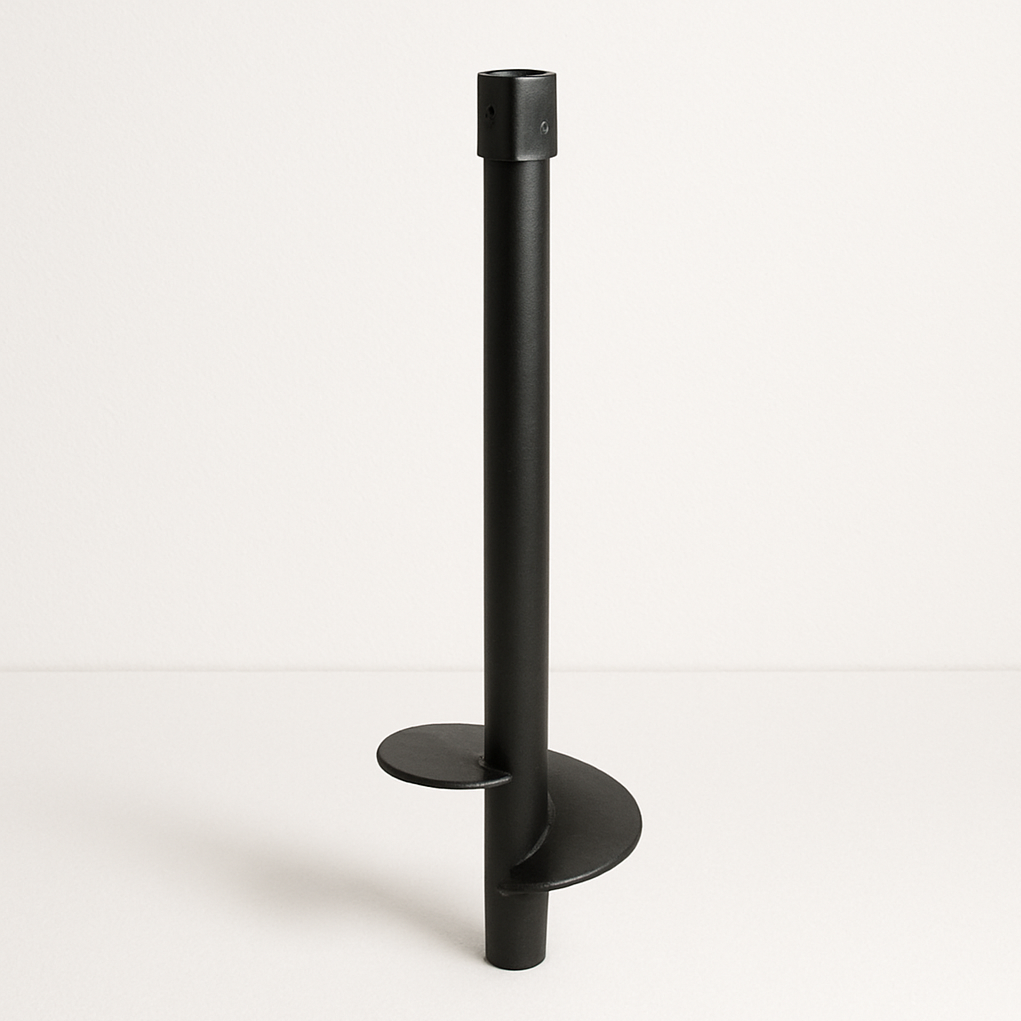
Since unstable soil is the problem, the most logical solution is to bypass it entirely. That’s precisely what a helical pier does. The simplest way to think of a helical pier—sometimes called a screw pile—is as a giant, galvanized steel screw. Instead of just patching a crack, this solution addresses the root cause by creating a new, ultra-stable support system for your home that extends far below the problematic soil near the surface.
The principle behind it is remarkably straightforward and is one of the key advantages of screw piles for foundations. Here’s how it works:
Bypass the Bad Soil: The pier is mechanically “screwed” into the ground, drilling past the top layers of expansive clay that shrink and swell.
Anchor in the Good Soil: It continues deep into the earth until it hits a solid, load-bearing layer (like bedrock or dense strata) that won’t shift.
Support the House: A heavy-duty steel bracket is attached to the top of the pier and secured to your home’s foundation, transferring the weight of the house directly onto the stable pier.
Each pier acts like a steel stilt driven down to solid ground. They are installed until they reach a specific, engineer-approved resistance, which verifies the helical pier load capacity required to support that section of your home permanently. This process doesn't just stop further settling; it secures your foundation for the long term, giving you a stable base you can count on.
The Helical Pier Installation Process
Less Disruption Than You'd Imagine
When you hear “foundation repair,” it’s easy to picture a major construction zone with your yard completely torn up. The helical pier installation process, however, is surprisingly neat. Instead of digging a massive trench around your home, technicians perform targeted excavations—digging small, precise holes only at the specific locations where each pier will be installed. This surgical approach is designed to preserve your landscaping as much as possible.
With the access points prepared, the actual installation begins. This doesn't involve the roaring bulldozers you might expect. Instead, compact hydraulic equipment is used to quietly and powerfully twist each pier deep into the earth. The machine monitors the resistance as it drives the pier, ensuring it reaches solid, load-bearing soil as specified by an engineer. This part of the structural repair with helical anchors is about precision, not brute force.
Once the piers are securely anchored, heavy-duty steel brackets are attached to connect them to your foundation. At this stage, a crucial decision is made based on the engineering plan. Using hydraulic jacks, the crew will either stabilize the foundation to prevent any future movement or, if conditions allow, attempt to gently lift the settled portion back towards its original position. The primary goal is always to create permanent stability for your home.
Finally, the team carefully backfills the excavated areas, aiming to leave your property looking tidy. The result is a home secured on a deep, unshakable foundation, achieved with a process far less invasive than most homeowners imagine. While this method is highly effective for Colorado's soils, it's one of two leading pier systems used today.
Helical Piers vs. Push Piers
Which is Right for Colorado's Unique Soil?
To make an informed decision, it’s helpful to compare helical piers with the other leading solution you might hear about: the push pier. At first glance, they seem similar, but the installation method is fundamentally different. A helical pier is actively screwed into the ground like a corkscrew, while a push pier is a straight steel tube that is hydraulically driven—or pushed—straight down. This core difference in the helical piers vs push piers debate is what determines how each system proves its stability.
A helical pier’s strength comes from verifiable resistance. As it’s screwed in, the hydraulic machinery measures the turning force, or torque. When a specific, engineer-approved torque is reached, it’s proof the pier has anchored into solid, load-bearing ground. A push pier, on the other hand, relies on your house’s weight as its counter-force. It’s pushed down until the soil’s resistance equals the weight of the structure sitting on the jack, meaning its ultimate stability depends on how heavy your house is.
For Colorado’s tricky expansive soils, this distinction is critical. Our ground often has hard, dense layers of clay that aren’t truly stable. A push pier might stop at one of these layers, unable to be pushed further by a lighter home, giving a false sense of security. Because a helical pier is actively screwed in, it can power through these deceptive layers. The measurable torque provides undeniable proof that the pier has reached a deep, truly stable stratum, making it one of the best foundation piers for clay soil and a reliable choice for permanent foundation underpinning.
The Big Questions
Cost, Longevity, and When Are Piers Really Necessary?
This solution leads to three practical questions about cost, longevity, and necessity. First, the cost of helical piers in Colorado is not a flat fee but is based on the number and depth of piers your home needs. Think of it like a prescription: a structural expert first diagnoses the extent of the settlement and then determines the precise number of piers required to permanently support the structure. Because every home and soil situation is unique, the total investment can only be determined after a professional evaluation.
This leads to the second question: is it worth it? While it's a significant project, you are paying for a permanent solution. So, how long do helical piers last? For the life of your home. The piers are made from heavy-duty, galvanized steel designed to resist corrosion from soil and moisture for decades. By anchoring your foundation to stable earth, they stop settlement in its tracks, protecting your home’s value and giving you lasting peace of mind.
This brings up the final question: when are helical piers necessary? Not every small drywall crack signals a foundation catastrophe. However, certain patterns are clear warning signs that you should seek a professional opinion. If you spot any of the following issues, it's a good idea to schedule an evaluation:
Stair-step cracks in brick or concrete block walls.
Doors or windows that stick, jam, or show uneven gaps.
Sloping floors or new gaps appearing between the floor and your baseboards.
Large cracks in drywall, especially those originating from the corners of doors and windows.
A chimney or porch that is visibly leaning or pulling away from the main house.
Your Next Step: How to Get a Professional Foundation Evaluation
The unsettling cracks and sticking doors in your home point to Colorado's expansive soil as the likely cause, but a permanent solution exists. By understanding the problem, you can confidently take the next step to protect your investment and restore your peace of mind.
Your next step is to seek a professional opinion. Thats where our expertise comes in. We will provide you with a clear guide to foundation underpinning and determine if a structural repair with helical anchors is the right solution.
Before you make a call, take five minutes right now. Walk through your home and take photos of the issues you’ve noticed. Having this documentation ready will make your conversation with our professionals clear and productive. You are no longer just watching a problem grow; you are now equipped to take the first, most important step in securing your home’s value.
