
Sustainable Foundations: Helical Piers Lead the Way
When you picture a new foundation, you probably imagine a giant, muddy pit and concrete trucks. For over a century, that’s how we’ve given our homes a solid footing. But what if the greenest, smartest way to build started with no pit at all? What if it worked more like a giant screw?
That traditional concrete slab has a surprisingly large environmental footprint, most of which is created long before the first wall ever goes up. The creation of cement, concrete’s key ingredient, is responsible for a staggering amount of global pollution. According to industry data, it accounts for about 8% of the world's total CO2 emissions—more than the entire aviation industry. This creates a massive "hidden carbon footprint" locked into your home before you even move in.
But the carbon footprint of foundation systems isn't just about CO2. The problems with concrete foundations extend right into the building site itself:
Massive Soil Excavation: A typical foundation requires digging and hauling away tons of earth, which destroys topsoil, disrupts natural water drainage, and displaces the local ecosystem.
High Water Consumption: Mixing all that concrete requires thousands of gallons of fresh water, a resource that is becoming increasingly precious.
Permanent Land Alteration: Once poured, a concrete foundation is there forever, making it incredibly difficult to return the land to its natural state in the future.
Don't be too discouraged, sustainable engineering and sustainable construction is on the rise. Helical Piers are a sustainable infrastructure, offering foundational systems with less environmental impact.
What Is a Helical Pier?
How Does It Create a Rock-Solid Foundation?
At its core, a helical pier is like a giant, engineered steel screw. If you look at one, you’ll see a central steel shaft with one or more circular plates—called helices—welded to it in a spiral pattern, much like the threads on a corkscrew. These plates aren't for decoration; they are scientifically designed to grip the soil and provide incredible stability once the pier is installed.
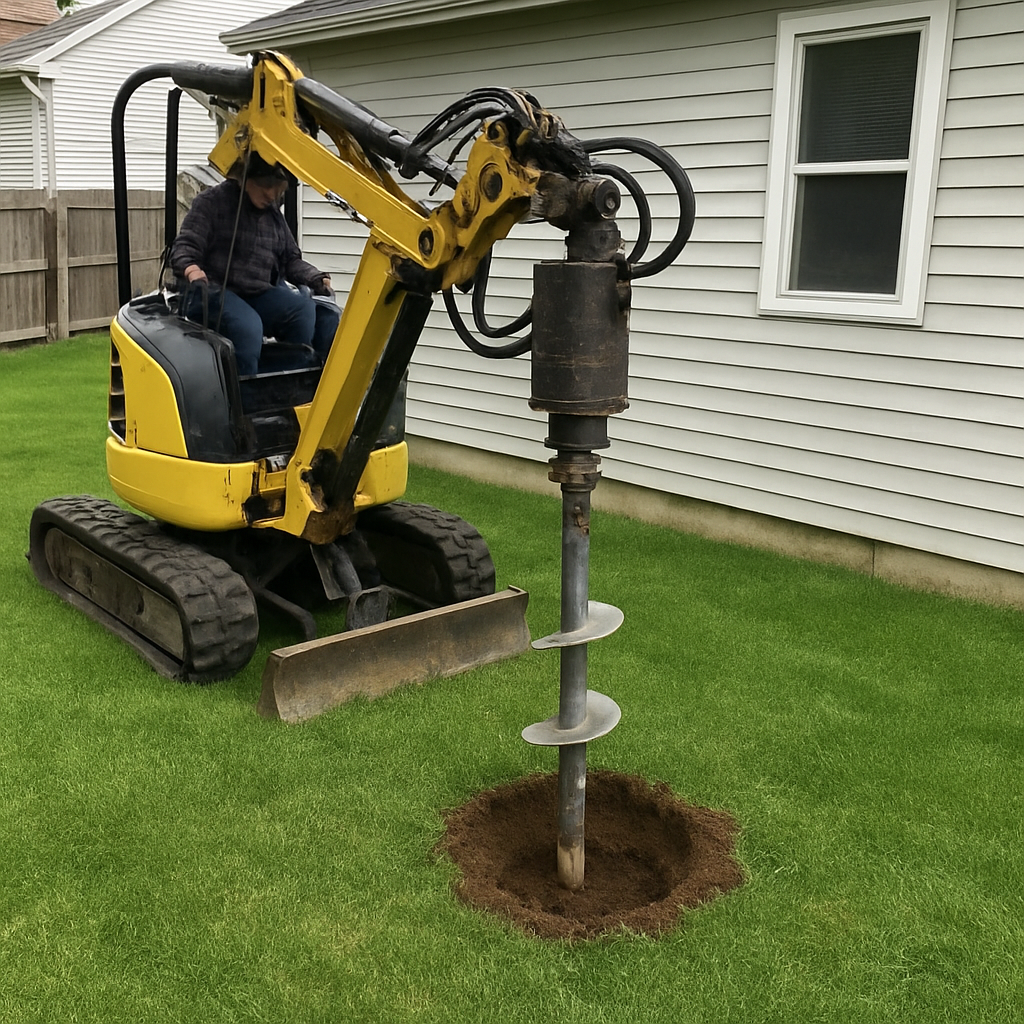
Unlike traditional foundations that require massive excavation, helical piers are gently twisted into the ground using hydraulic machinery. This process is surprisingly quiet and clean. The pier drills down through the soft, unstable topsoil, sand, or clay that can’t reliably support a structure. It continues deeper and deeper until it reaches solid, load-bearing earth or bedrock far below the surface.
The real genius of this system is how it confirms its own strength. As the pier is twisted into the ground, the installation equipment constantly measures the turning resistance, or torque. Think of it like tightening a bolt with a wrench—you can feel exactly when it becomes tight and secure. Once the pier hits that solid layer of earth, the resistance spikes, telling the installer they have reached a firm footing. This process scientifically verifies that each pier is anchored into stable ground, locking your foundation in place for good.
Keep Your Landscape
The #1 Benefit of Minimal Site Disturbance
When you think of building a foundation, you probably picture a scene of controlled chaos: excavators, dirt piles, and a huge, muddy pit where your lawn used to be. For concrete slabs and basements, this massive upheaval is a necessary step. Because helical piers are twisted into the ground, however, they completely sidestep this destructive phase.
This low-impact approach means you can preserve the very landscape you love. Imagine being able to build a home addition without sacrificing the mature oak tree that provides shade all summer, or putting up a deck without destroying your carefully tended garden. Minimizing site disturbance during construction ensures the existing topsoil, delicate root systems, and natural water drainage patterns remain intact. Your yard isn't turned into a construction zone for weeks on end; instead, it stays healthy and whole.
This surgical precision makes helical piers one of the best foundation solutions for sensitive sites. Building a cottage near a protected shoreline, a cabin in a dense forest, or a home on a steep slope becomes dramatically simpler and more responsible. You can establish a rock-solid foundation without clear-cutting trees or risking soil erosion into a nearby lake. By leaving the land almost as you found it, this method is not just about convenience—it’s a fundamental part of building more sustainably. But the benefits go even deeper than the ground you stand on, extending to the very air we breathe.
How Helical Piers Dramatically Reduce a Project's Carbon Footprint
Beyond preserving your landscape, the real environmental advantage of helical piers comes from what they’re not: a massive block of concrete.
Every ton of cement—the key ingredient in concrete—releases a nearly equal amount of CO2 during its production, creating a significant hidden carbon footprint before it even reaches your property. A helical pier foundation, however, uses a fraction of the raw material weight to support the same load. Since these steel piers are engineered for maximum strength with minimal mass and are often made from recycled metal, their overall carbon footprint is dramatically smaller than that of a comparable concrete foundation.
This efficiency extends directly to the installation process itself. Preparing and pouring a concrete foundation involves a parade of heavy, fuel-guzzling machinery, from large excavators digging the pit to cement mixers running for hours. In contrast, the compact hydraulic equipment used to install helical piers is far more fuel-efficient. It’s the difference between powering several large diesel engines all day and operating one small, targeted machine for a much shorter period. This stark reduction in fuel consumption means fewer harmful emissions are released directly into the air around your home.
These measurable reductions in material and on-site emissions are precisely why helical piers are becoming a favorite in green construction. For projects seeking formal recognition through programs like LEED (Leadership in Energy and Environmental Design), choosing a helical pier system can contribute valuable points toward certification. It’s a foundation choice that isn’t just good in theory—it’s recognized by industry standards as a tangible step toward building a more sustainable future. But the sustainability story doesn't even end when the building comes down.
A Foundation That Isn't Forever?
The Surprising Reusability of Helical Piers
Traditional concrete foundations are a one-way street; once poured, they are a permanent fixture. Removing them requires loud, destructive demolition that leaves behind a fractured landscape and tons of rubble destined for a landfill. Helical piers, however, offer a radically different end-of-life story. Because their installation is a mechanical process, not a chemical one, it’s completely reversible. Using the same equipment, piers can be unscrewed from the ground, leaving the soil almost as undisturbed as the day they were installed.
This ability to be cleanly removed unlocks a powerful benefit: reusability. Instead of becoming construction waste, removed steel piers can be inspected, certified, and redeployed on a completely different project. This creates a truly circular system that dramatically reduces construction waste, a key reason they are seen as one of the best long-term alternatives to traditional concrete foundations. Where a concrete slab creates a permanent problem for future land use, a helical pier foundation can simply be packed up and moved on.
You might wonder why anyone would want to remove a foundation, but this feature is a game-changer for temporary or relocatable structures. Think about modular offices on a long-term job site, portable classrooms for a growing school, or even a remote cabin that may one day be moved. Helical piers provide the same rock-solid stability as a permanent foundation but with the option to disappear without a trace. This unique flexibility is just one of the many practical advantages that make this system so appealing.
Faster, Cleaner, and More Versatile
The Practical Benfits of a Screw Pile Foundation
While the long-term environmental benefits are compelling, the immediate, practical perks are what often win people over to helical piers. A foundation that is faster, cleaner, and more adaptable can completely change the experience of a construction project. It means less waiting, less disruption, and more possibilities for your property, whether you’re planning a small deck or a brand new home.
Forget the week-long process of excavation, pouring concrete, and waiting for it to cure. Helical pier installation is remarkably efficient. A small crew with specialized, low-impact equipment can typically install the complete foundation for a home addition in a single day. There’s no massive pit of mud, no fleet of heavy trucks tearing up your lawn, and your carpenters can start building the very next day. It’s a quiet, surgical approach that keeps your yard—and your neighbors—happy.
This system also shines where traditional concrete struggles. Do you have a beautiful, sloped property where a standard foundation would require costly and destructive earth-moving? Or perhaps the soil near your lakefront cottage is too soft to support a heavy concrete slab. Helical piers solve this by acting like long screws that bypass the weak topsoil, anchoring your structure firmly into the stable, solid ground deep below. They effectively turn "problem sites" into prime real estate.
Ultimately, these on-the-ground advantages are what make the system so appealing. It boils down to a few powerful benefits:
Speed: Your foundation is installed and ready to build on in hours or days, not weeks.
Cleanliness: The process involves minimal noise and mess, preserving your landscape.
Versatility: You can build confidently on slopes, in soft soil, or in other challenging locations.
These practical benefits, combined with their sustainability, are why so many are asking if a helical pier foundation is the right choice for them.
Making the Sustainable Choice
Is a Helical Pier Foundation Right for You?
Choosing a foundation is a significant decision, and understanding sustainable alternatives is a crucial first step. Helical piers offer a powerful combination of environmental responsibility and project efficiency—a solution that is kinder to the earth and your timeline. When you discuss options with a contractor, being well-informed allows you to be an active partner in the design process.
To ensure you make the best choice for your property and goals, here are a few key questions to guide the conversation:
Here’s a checklist to guide your discussion:
Is my project and soil type suitable for helical piers?
Can you provide a cost and timeline comparison against a traditional concrete foundation?
Are your installers certified for this type of foundation?
Armed with these questions, you’re not just planning a deck or an addition; you’re planning a smarter, more responsible future for your property. You can now build with the confidence that the strongest foundations are not only solid and secure, but also intelligent and sustainable from the ground up.
